
Applicable conditions
- Distributed, intermittent sources such as injection molding
- Production lines requiring independent operation
- Low-load points unsuited to long-distance ducting
- Phased retrofits of existing workshops
Source treatment equipment
In-situ catalytic treatment — Integrates pretreatment, RAO catalytic oxidation and air movement in a compact enclosure close to an individual production line, with linked start and stop control.
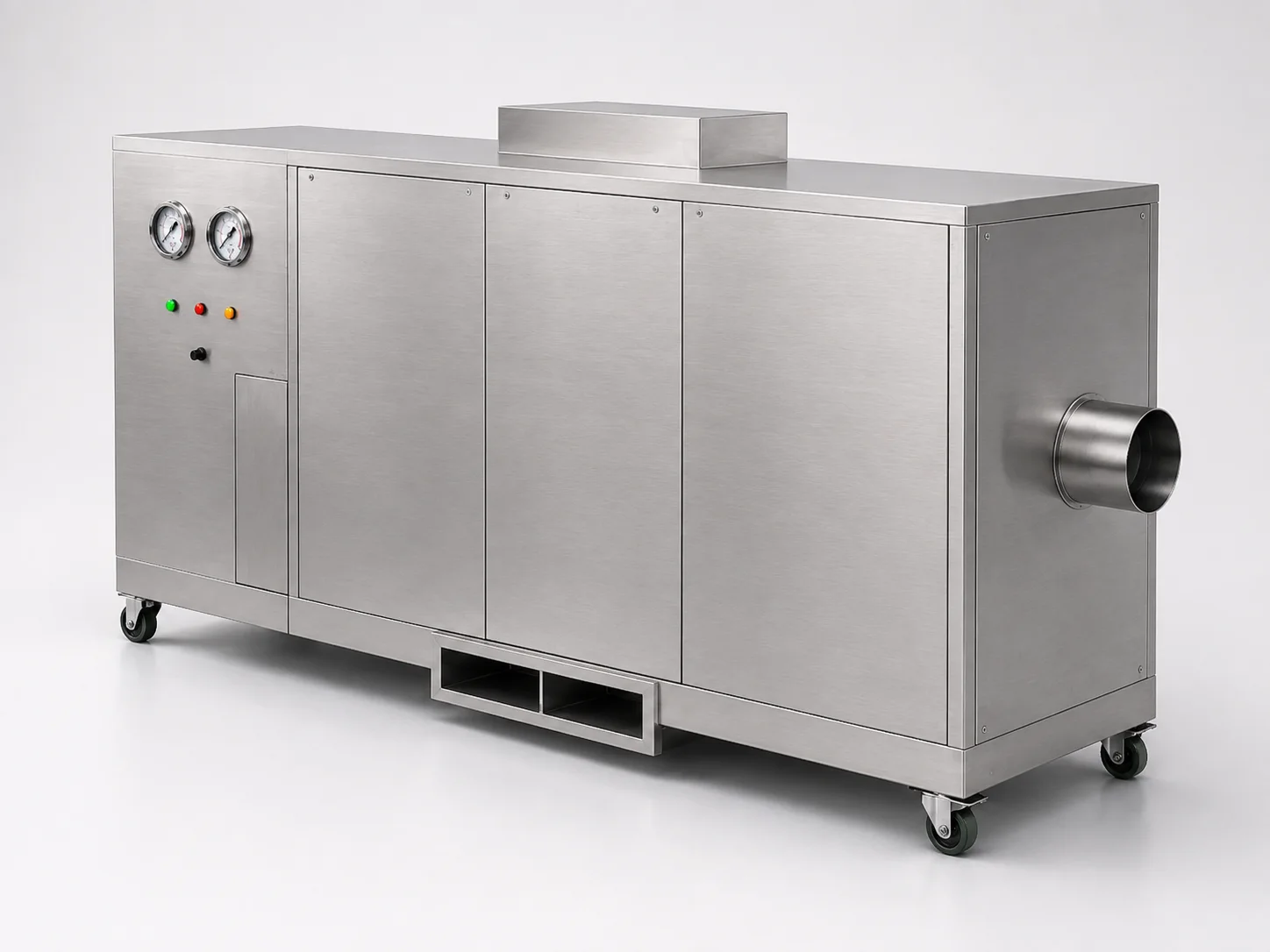
Select the model and internal sections for the pollutants, airflow, temperature, humidity, oil mist and particle load. RAO-800 describes a particular configuration and does not fit every production line.
Combine with local capture hoods, dry filtration, dehumidification and an existing clean-exhaust header. Link operation to production status to limit unnecessary running.
PROCESS & OPERATION
RAO-800 integrates pretreatment, catalytic treatment and air movement close to suitable distributed sources. The retrofit focuses on capture, shorter transport paths and production-linked operation.
Explore testing & validation ↗Confirm hood position and the direction of pollutant release.
Limit unnecessary dilution airflow and long-distance transport.
Coordinate production status with start-up, shutdown and purge requirements.
Check one line’s performance and operating costs before a phased retrofit.
Review compounds, airflow, oil mist and start/stop frequency at distributed sources such as molding stations.
Check the existing exhaust header, branch balance and shutdown isolation.
Compare measured electricity, consumables, operating hours and maintenance against the original baseline.
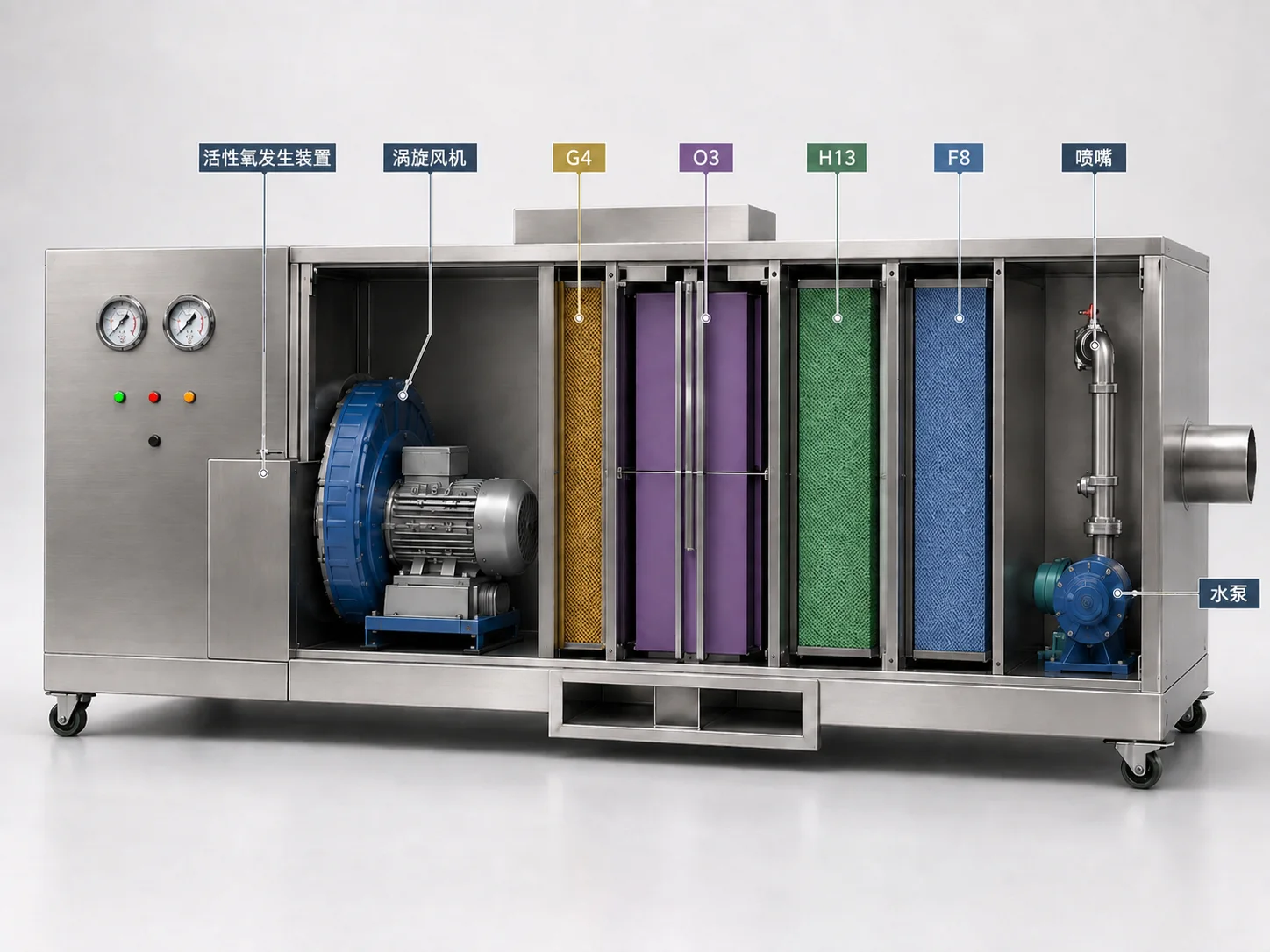
EQUIPMENT STRUCTURE
The arrangement illustrates the relationship between treatment sections and maintenance access. The configuration depends on pollutants, airflow, temperature, humidity and upstream loads.
LET’S TALK ABOUT YOUR PROJECT
Share your airflow, temperature, humidity, target pollutants or cleanliness requirements. We will help assess suitable equipment and system configurations.